Iran Escalates Maritime Tensions, Attacks Ships Near Hormuz
Iran's Revolutionary Guards claim to have targeted multiple vessels, intensifying confrontations in the Strait of Hormuz and impacting global oil prices.
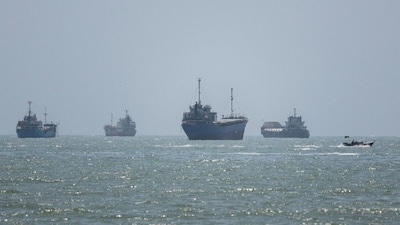
Iran's Revolutionary Guards reported attacks on two US vessels and several oil tankers.
A newly established no-go zone has been expanded into the Gulf of Oman and Arabian Sea.
Oil prices surged above $100 per barrel amid rising tensions.
On September 9, 2026, Iran's Revolutionary Guards announced a series of attacks on vessels near the Strait of Hormuz, claiming responsibility for targeting two US ships, eight oil tankers, and ten other vessels that allegedly violated maritime regulations. This aggressive action marks a significant escalation in Iran's ongoing confrontation with the United States, as tensions in the region continue to rise.
The backdrop to this incident includes a series of confrontations in the Strait of Hormuz, a crucial maritime passage for global oil shipments. Iran has recently demanded that all vessels seek prior permission and pay transit fees to cross this strategic waterway. The Iranian government has framed its military actions as necessary for national security, asserting that they are responding to perceived threats from US military operations in the region.
In a statement to state media, a spokesperson for the Revolutionary Guards indicated that the attacks were part of a broader strategy to enforce a newly declared prohibited zone, which has now extended into parts of the Gulf of Oman and the Arabian Sea. The United Kingdom Maritime Trade Operations (UKMTO) corroborated reports of disabling fire directed at several vessels in the Gulf, emphasizing the heightened military activity in the area.
The implications of these developments are significant, as they not only threaten regional stability but also have a direct impact on global oil markets. Following the announcement of the attacks, Brent crude oil prices surged to $101.21 per barrel, reflecting concerns over potential disruptions in one of the world's most vital shipping lanes. The situation has raised alarms among international shipping companies and governments, who are closely monitoring the evolving dynamics in the region.
Looking ahead, the situation remains fluid as both Iran and the United States continue to engage in military posturing. US Secretary of State Marco Rubio has warned that American forces will respond decisively to any further Iranian aggression against naval vessels. Meanwhile, Iranian officials have indicated that they are open to negotiations, contingent on the US meeting specific demands, including lifting sanctions and ceasing military operations in the region. As tensions mount, the international community is urged to seek diplomatic solutions to prevent further escalation.