New Jurassic Belemnite Species Discovered in Wyoming
A unique squid-like creature from the Jurassic era has been identified in Wyoming, marking a significant paleontological find.
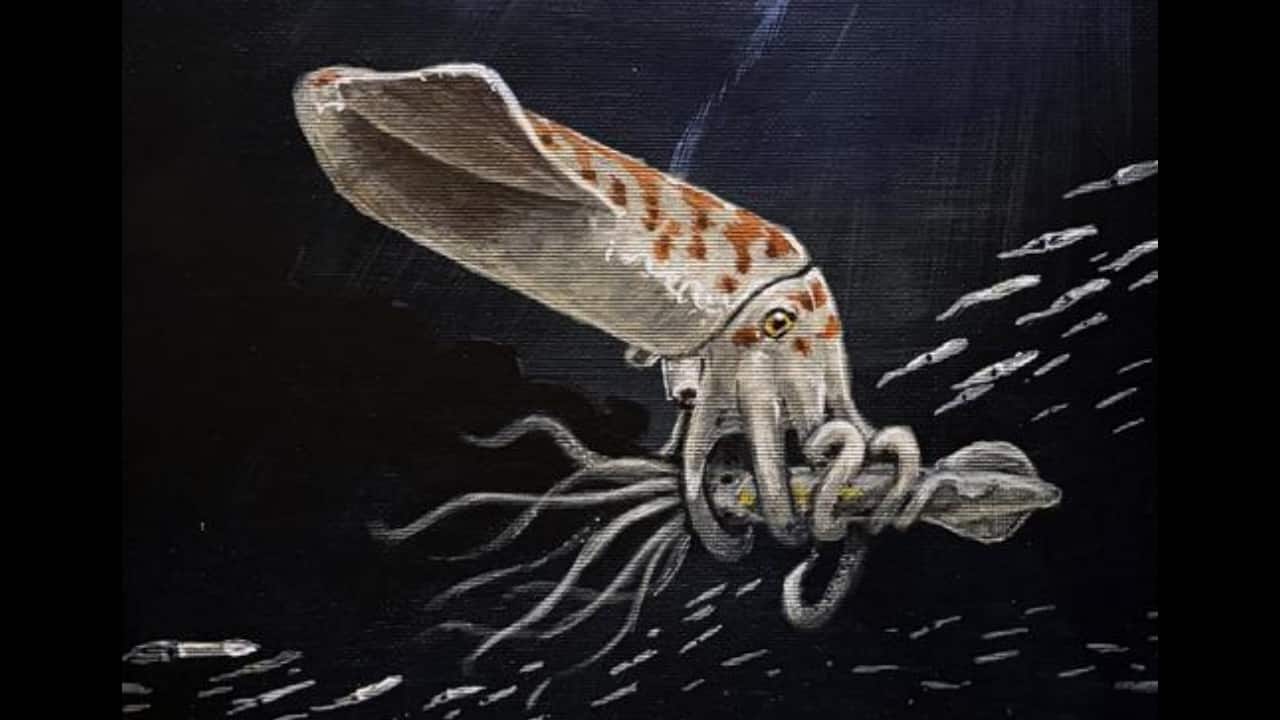
The newly identified species, Wyoteuthis linsterorum, features an unusually thick internal skeleton.
Fossils of this species were overlooked for decades before being studied together.
The discovery highlights the potential for new species to emerge from well-explored fossil sites.
Paleontologists have announced the discovery of a new species of belemnite, Wyoteuthis linsterorum, in Wyoming, USA. This ancient cephalopod, which lived approximately 160 million years ago, is noted for its unusual thick, barrel-shaped internal skeleton. The discovery was made possible through the analysis of two rare fossils, one of which had remained largely unexamined in a museum collection for many years.
Belemnites were prevalent marine animals during the Jurassic Period, easily recognized by their bullet-shaped hard parts known as rostrum. The Sundance Formation in Wyoming has yielded millions of belemnite fossils, but Wyoteuthis linsterorum stands out due to its distinctive proportions. Unlike the common narrow rostrum of 5 to 10 centimeters found in other belemnites, this new species has a rostrum measuring around 10 centimeters in length and up to 6 centimeters in width, making it the thickest belemnite documented to date.
The journey to this discovery began nearly three decades ago when Wyoming paleontologist Bill Wahl first encountered one of the unusual fossils in the late 1990s. Despite its size and unique features, the specimen remained in a museum drawer until it was studied alongside another fossil found by collector Cliff Linster in 2019. The combined analysis of these fossils provided enough evidence to classify a new species.
Using computed tomography (CT) scanning, researchers were able to examine the internal structures of the fossils without causing damage. This method revealed that Wyoteuthis linsterorum belonged to a family of belemnites previously thought to have vanished millions of years ago. The unexpected nature of this find has surprised many in the paleontological community, as belemnites have been extensively studied for over two centuries.
The implications of this discovery extend beyond the identification of a new species. It underscores the potential for significant finds in regions that have been thoroughly explored. The genus name Wyoteuthis translates to “a squid from Wyoming,” while the species name honors Cliff Linster, who passed away earlier this year. Both specimens of Wyoteuthis linsterorum are now displayed at the Wyoming Dinosaur Center, serving as a testament to the contributions of amateur fossil collectors in advancing scientific knowledge.


